
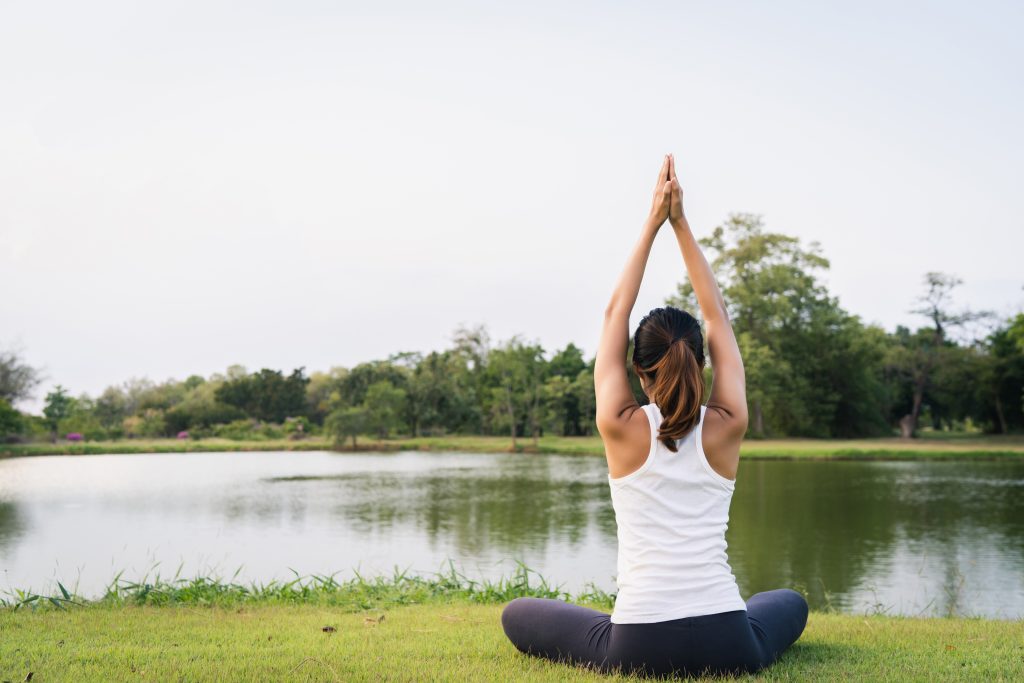
Everyone has something in their life that makes them anxious or stressed. It’s completely normal. However, you should know there’s a remarkable solution for this, one that will change it all. Through the power of meditation, you can experience the joy of letting go. Although it may be hard to picture yourself doing an exercise that requires an incredible amount of discipline, it’s worth a chance, as it offers many mental health benefits.
Breathwork is an important part of meditation. Just one deep breath can do wonders for your emotional well-being, bringing you a sense of groundedness. According to the University of California Davis, meditative breathing reduces stress, improves focus, and enhances self-awareness. Close your eyes and watch the world fade away.
Experience the power of meditation with each healing breath you take. Use breathwork techniques to control negative emotions with mindfulness guiding you along the way. Popular methods include diaphragmatic breathing, 4-7-8 breathing, and alternate nostril breathing. Creating harmony within the body and mind by observing yourself in relation to the world around you is achievable through mindful breathwork.
One other major benefit of meditating is that it helps you learn how to be compassionate to yourself and others. It teaches you to build patience, so you can improve relationships with loved ones. Releasing negative feelings while learning how to show up for the people who care about you is a major part of meditative practices.
Handle personal issues more calmly and do your part to help others along the way. One disappointment after the other, sometimes life makes it difficult to accept situations for what they are. It’s why tapping into the power of self-healing through meditative exercises brings peace and understanding to all your relationships.
Meditating calms your nervous system. Once your heart stops racing and you’re no longer experiencing shortness of breath, you will finally be able to see the world around you with a brand new set of eyes. It makes a huge difference to singlehandedly eliminate physical pain. Oftentimes, when your nervous system is unbalanced, it causes emotional turmoil as well, which is why meditating is so important. Become shielded from problems that bother you or create any type of pain and experience the benefits of shutting down the “fight or flight” response. These practices facilitate the “rest or digest” reaction, physically calming your body down through meditative exercises.
For anyone interested in learning how to practice these techniques but can’t find the time, there are options for you. Try using a mobile application to calm your nerves. Discover the ability to create a sense of calmness from within with apps like Calm, Headspace, and The Mindfulness App.
Consider this an excellent solution for whenever your anxiety feels out of control. Use these techniques on the bus, in the car, or on your way to work. Including these methods to destress creates a major difference in your quality of life.
In today’s society, many people may feel like they’re running on adrenaline. It seems like you’re being pulled in an infinite number of directions. While working out your problems with meditations, it offers you the opportunity to push past pain you’ve been suffering from for years. Learn how to manage issues at work better and be more patient when you’re needing to improve communication.
Creating peace from inside your soul, it is going to show you just how much you are able to handle when you take control of your own journey, teaching your feelings who’s boss simply by quieting your mind with meditation. Watch doors open up like never before. Get ready—you have an amazing journey ahead, with a much clearer mind.
Mindfulness Meditation
Mindfulness meditation is the practice of observing the present moment without judgment. You simply notice your breath, body sensations, thoughts, and emotions as they arise — not labeling them as “good” or “bad,” but just as they are.
Stress often lives in the future or the past — worrying about what might happen or replaying what already did. Mindfulness anchors you back into the now, where the body can finally relax. By grounding your attention in the present, you retrain your nervous system to respond instead of react.
How to practice:
Try this reflection:
“What would it feel like to be completely here, in this moment, without needing to change anything?”
Guided Visualization — The Imagination’s Calm Place
Guided visualization involves using mental imagery to create peaceful experiences in your mind — walking through a forest, sitting on a beach, or watching clouds drift by.
Your brain doesn’t always know the difference between real and vividly imagined. When you visualize calming scenes, your body’s stress response (cortisol, adrenaline) decreases, and you activate your parasympathetic nervous system — the “rest and digest” state.
How to practice:
Breath Awareness Meditation
This is the classic “breathing meditation.” You focus entirely on your breath, its rhythm, depth, and movement, as an anchor for awareness.
When you’re stressed, your breathing becomes shallow and rapid, which signals your brain that danger is near. Conscious breathing flips the switch back to calm, reducing heart rate and blood pressure almost instantly.
How to practice:
Loving-Kindness Meditation (Metta)
A practice of sending well-wishes to yourself and others. You silently repeat phrases like:
“May I be safe. May I be happy. May I be healthy. May I live with ease.”
Stress shrinks your perspective; it narrows you into survival mode. Loving-kindness expands the heart and softens the inner critic. Studies show it reduces self-judgment and boosts positive emotions, which counteract stress hormones.
How to practice:
Yoga Nidra — The Deepest Rest
A guided, full-body relaxation practice sometimes called “yogic sleep.” You lie down and follow a voice through stages of awareness between wakefulness and sleep.
Why it helps:
Yoga Nidra activates deep rest without losing consciousness. It reduces anxiety, insomnia, and chronic stress. Some say 30 minutes of Yoga Nidra feels like 3 hours of deep sleep.
How to practice:
Transcendental Meditation (TM) — Quieting the Mind Beyond Thought
A structured meditation using a silent mantra (a word or sound repeated mentally) to go beyond thought. It’s practiced for 20 minutes twice a day.
TM allows the mind to naturally settle into a state of stillness. Numerous studies link it to lowered cortisol, improved focus, and greater emotional stability. For people overwhelmed by racing thoughts, TM can feel like opening a window in a stuffy room.
How to practice:
Walking Meditation — Movement That Heals the Mind
A mindful, slow, intentional way of walking where each step becomes a meditation. You synchronize your breath with your pace, noticing the sensations in your feet and legs.
Physical movement helps discharge nervous energy built up by stress. Walking meditation is ideal for those who struggle to sit still. It merges mindfulness with movement — grounding you both mentally and physically.
How to practice:
Mantra Meditation — Words That Rewire the Mind
Mantra meditation involves repeating a sacred word, phrase, or sound such as “Om,” “Peace,” or “I am calm” to focus the mind.
When your mind is filled with one soothing sound, there’s no room for stressful chatter. Over time, your subconscious begins to associate the mantra with tranquility, creating a conditioned response to relax.
How to practice:
Progressive Muscle Relaxation (PMR) — The Body’s Reset Button
A method of tensing and relaxing muscle groups systematically, helping you become aware of the difference between tension and release.
Stress often hides in the body. PMR discharges that physical stress, triggering the relaxation response. It’s great for people with anxiety, chronic pain, or trouble sleeping.
How to practice:
Tip: Pair PMR with slow breathing or soft music for deeper calm.
Candle Gazing (Trataka) — Focusing the Mind Through the Flame
You focus your gaze on a single candle flame without blinking until your eyes water slightly, then close them and visualize the flame within.
Trataka trains concentration and quiets restless mental energy. The gentle flicker of the flame engages the parasympathetic system, slowing down the mind’s noise.
How to practice:
Gratitude Meditation — Rewiring the Brain for Joy
A focused meditation on things, people, or moments you’re grateful for — cultivating appreciation as a mental habit.
Gratitude activates brain regions associated with happiness and reduces stress-related activity in the amygdala. It shifts your attention from what’s missing to what’s present, dissolving emotional tension.
How to practice:
Whisper, “Thank you,” slowly and sincerely.
Close your eyes and recall three things you’re grateful for today.
Feel the warmth of appreciation spread through your heart.
Visualize each blessing vividly.